
Recipe card, slightly stained, corner folded, handwriting unmistakably someone’s grandmother’s. A handwritten recipe card carries more than instructions — it carries the memory of a specific kitchen, a specific person, a specific smell that filled the house on a specific afternoon.
Pippit’s SeedAudio 1.5 model lets creators turn that worn recipe card into a short, nostalgic video, pairing warm visuals of the dish coming together with narration and sound that make the memory feel present again.
Since this format is really about honoring a handwritten card, let’s annotate it the way the recipe itself might be marked up.
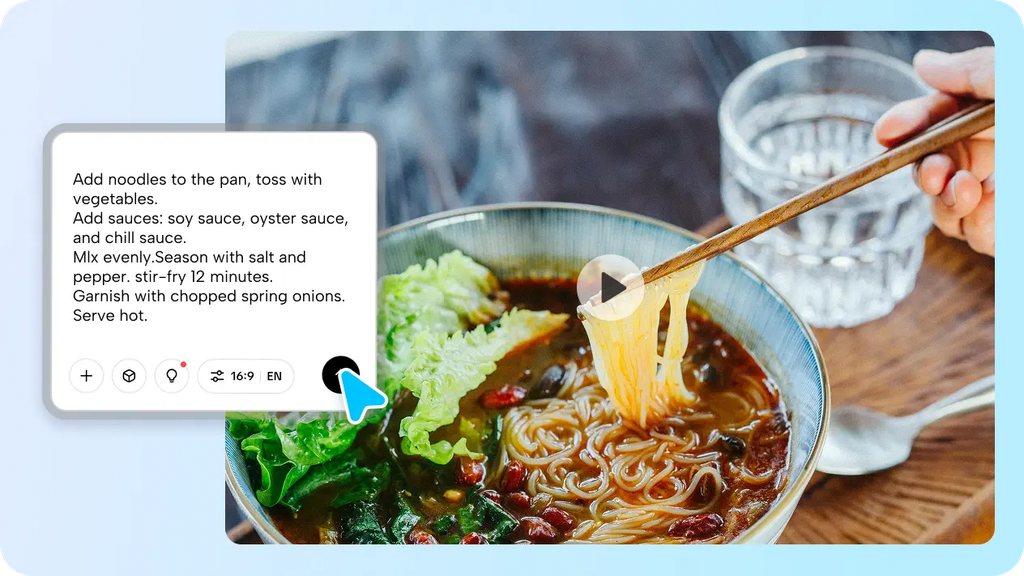
Margin note: why this specific format resonates
Food memories are rarely just about taste — they’re tied to a person, a kitchen, a specific moment in time. A recipe card animated into a short story taps directly into that emotional connection, turning a simple set of instructions into something closer to a tribute.
Ingredient list: what makes a recipe card work well
- A clearly legible recipe card or handwritten note, even if slightly worn or stained.
- A dish simple enough to visually represent in a short clip — a pie, a soup, a specific baked good.
- Some personal detail already present on the card — a name, a date, a small handwritten note in the margin.
- A photo of the finished dish, if available, to help anchor the visual accuracy of the final scene.
Cooking instructions: generating the story
Step 1: Upload your recipe card and write a time-stamped prompt
Open Pippit’s Video Generator, select Seedance 2.5, and upload the recipe card as a reference. Write a time-stamped prompt describing the story.
For example: Create a 15-second nostalgic food story video. 0–5 seconds: a close-up of a worn, handwritten recipe card on a wooden kitchen table. 6–11 seconds: hands gently mixing ingredients in a warm, sunlit kitchen, following the card’s instructions. 12–15 seconds: end on the finished dish being placed on the table, steam rising, warm afternoon light.
Step 2: Checking the warmth comes through
Review the draft against the emotional tone you’re going for — does the pacing feel unhurried and warm, matching the nostalgic weight of the actual memory, or does it need to slow down further?
Step 3: Extending the story, then serving it
If the memory includes more than one moment — the card itself, the cooking process, the final table setting — use the extension feature to connect them into one flowing sequence. Export at the resolution needed for a family gathering, a personal archive, or a social tribute post.
Narrating the memory with SeedAudio 1.5
A recipe story feels far more complete with a gentle spoken layer underneath it, and this is where SeedAudio 1.5 adds real emotional weight. It can generate a warm, reflective narration — perhaps reading the recipe’s handwritten instructions aloud, or a short remembered anecdote — using timestamp placement to keep the narration paced naturally alongside the visual story.
Beyond narration, SeedAudio 1.5 can generate the quiet, comforting sounds of an actual kitchen — a simmering pot, a gentle mixing bowl clink, a soft oven hum — layered underneath the narration as a separate track, adding texture without competing with the spoken memory.
Family notes: building a full recipe archive
- Collect multiple recipe cards from the same person for a longer tribute series.
- Keep narration tone consistent — warm and unhurried — across every entry in the collection.
- Pair each video with the person’s name and a short note about who they were.
Consider pairing a recipe story with Pippit’s talking photo feature, animating a photo of the person themselves alongside the recipe they’re remembered for.
Margin note: preserving the card’s handwriting clearly
Since the handwritten card itself is often the emotional centerpiece of the video, keeping the opening close-up sharp and legible, rather than overly stylized or blurred, respects the personal detail that makes this format meaningful in the first place.
Ingredient list: choosing dishes with a visible transformation
Recipes with a clear visual change during preparation — dough rising, a filling being poured, a dish browning — translate more compellingly to video than something that looks largely the same throughout the process.
Cooking instructions: including the hands, not just the dish
Showing hands actively engaged in the cooking process, rather than only the finished result, adds a human presence to the story that makes the memory feel lived-in rather than purely decorative.
Second helping: including a modern-day echo
Ending the video on a brief shot of the dish being made today, in a current kitchen, alongside the original card creates a quiet “then and now” thread, showing the recipe’s memory is still actively being carried forward rather than only looking backward.
Recipe complete
A handwritten recipe card has always been a small, quiet piece of family history, easy to lose in a drawer and easy to forget until it’s needed again.
With SeedAudio 1.5 and Seedance 2.5 inside Pippit, that card can finally tell its story in a way that actually honors the person who wrote it. If there’s a recipe card worth remembering, it might be worth opening Pippit and letting it be told properly.